

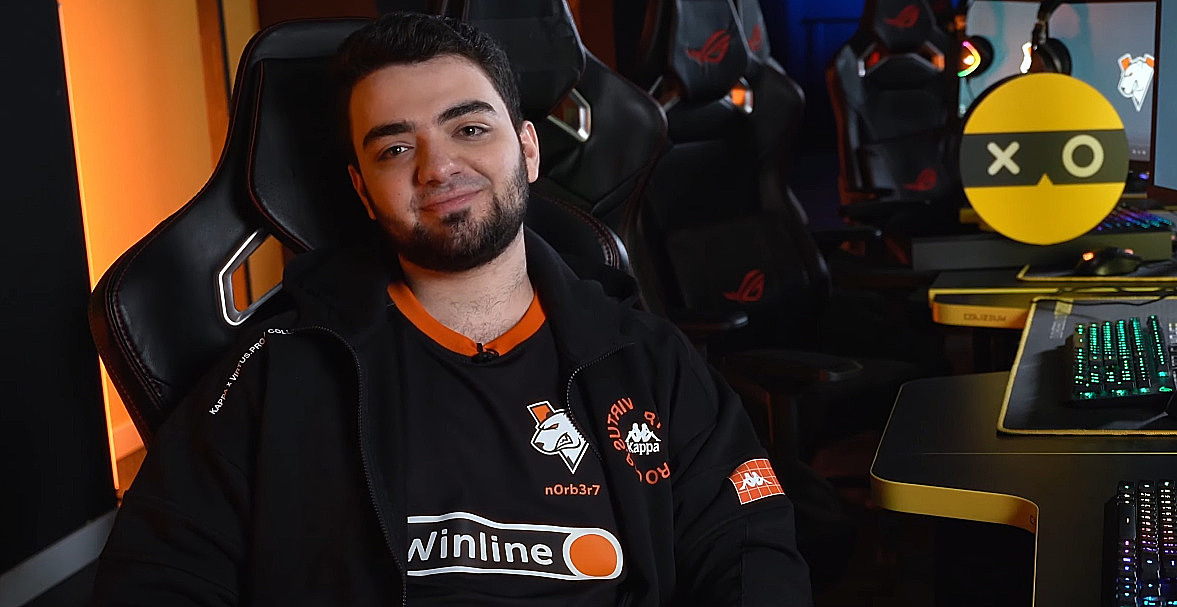
The highly competitive landscape of CIS Counter-Strike 2 frequently produces sudden surges of unexpected success, often raising questions about the relative value of veteran strategy versus pure, unbridled mechanical skill. Providing a rare, technical perspective on this dynamic, David “n0rb3r7” Danielyan, currently playing for HOTU and a former member of Virtus.pro, offered his insights during the BetBoom Streamers Battle x Dinamo CS event.
n0rb3r7’s commentary centered on two major regional entities: the currently struggling Virtus.pro lineup and the sensational, yet ultimately stalled, Major run of PARIVISION. His analysis cuts through the tactical noise, suggesting that sometimes, the simplest explanation is the most effective: raw firepower can momentarily bypass strategy.
The VP Variable: Effort and Tournament Selection
The conversation inevitably turned to Virtus.pro (VP), a team where n0rb3r7 once played, and one that has recently navigated a period of instability and underperformance. With the squad now attempting to reset its course under the leadership of Alexey “Perfecto” Selivanov, the community holds mixed expectations for their future.
When pressed on whether VP could return to their peak form in the upcoming season, n0rb3r7 offered a characteristically pragmatic, non-committal technical assessment:
“I don`t know, we will see. It all depends on which tournaments they choose to play. And on how much effort they put in. It`s difficult to predict. There are many different aspects that can influence that outcome.”
This response subtly highlights the fundamental difficulty in prognosticating success in high-level esports. It is not just about roster changes, but about optimal scheduling and the intangible factor of consistent, maximal effort—a technical truth often lost amidst fan speculation.
PARIVISION: When Aim Trumps Jame’s Tactics
Perhaps the most significant talking point in the CIS region recently was the unexpected performance of PARIVISION. Led by seasoned veterans like Dzhami “Jame” Ali and coaching stalwart Dastan “dastan” Akbayev, the team managed to reach the third stage of a Major—a remarkable feat for a newer lineup.
Many analysts credited the return of the calculated, highly disciplined, and often slow-paced “Jame Style” of tactical Counter-Strike for this breakthrough. n0rb3r7, however, offered a blunt counter-theory, rooted firmly in mechanical reality. He dismissed the tactical narrative, attributing the majority of their early success to simple efficacy:
“I think it’s not about his [Jame’s] style of play. It’s simply a young team that shoots well.”
This statement suggests a critical assessment: while Jame and dastan provide the structure, the engine of their success was the sheer, devastating aim of the youthful core. For a brief, shining moment, their technical skill was enough to dismantle higher-ranked teams.
However, this mechanical supremacy, according to n0rb3r7, had an expiration date. While raw skill propelled them through the initial, arduous stages, the journey halted abruptly when they reached the crucible of the Major’s later phase.
“They made it to a difficult stage,” he continued. “And there, they simply lacked experience. What they had was enough to get to the third stage. But going further, reaching the playoffs, is tough without that crucial experience.”
It is the classic competitive paradox: talent provides the ticket, but only wisdom and time on the server can secure the destination. For PARIVISION, their technical edge was ultimately overcome by the tactical depth and situational awareness possessed by true Major contenders.
The Ambition of HOTU
Finally, the interview shifted focus to n0rb3r7’s current team, HOTU. Given the conversation surrounding PARIVISION`s success and the potential pitfalls of relying solely on mechanical execution, the question remained whether HOTU could harness their own talent into a breakthrough performance.
n0rb3r7’s response here was optimistic and direct, acknowledging the roadmap laid out by their rivals. The goal is clear: to translate their current hard work into tangible results, much like PARIVISION momentarily achieved.
“Well, we are working on that right now,” he stated. “And we have every chance to repeat the success of PARIVISION.”
In the highly volatile CIS scene, where rosters rapidly evolve and young talent frequently erupts onto the stage, n0rb3r7’s analysis provides a necessary calibration. Success may begin with a technical advantage—a team that “simply shoots well”—but the path to sustained relevance requires the slow, grinding accumulation of experience, a factor that neither aim nor strategy can replace.
 Jasper Hawthorne