

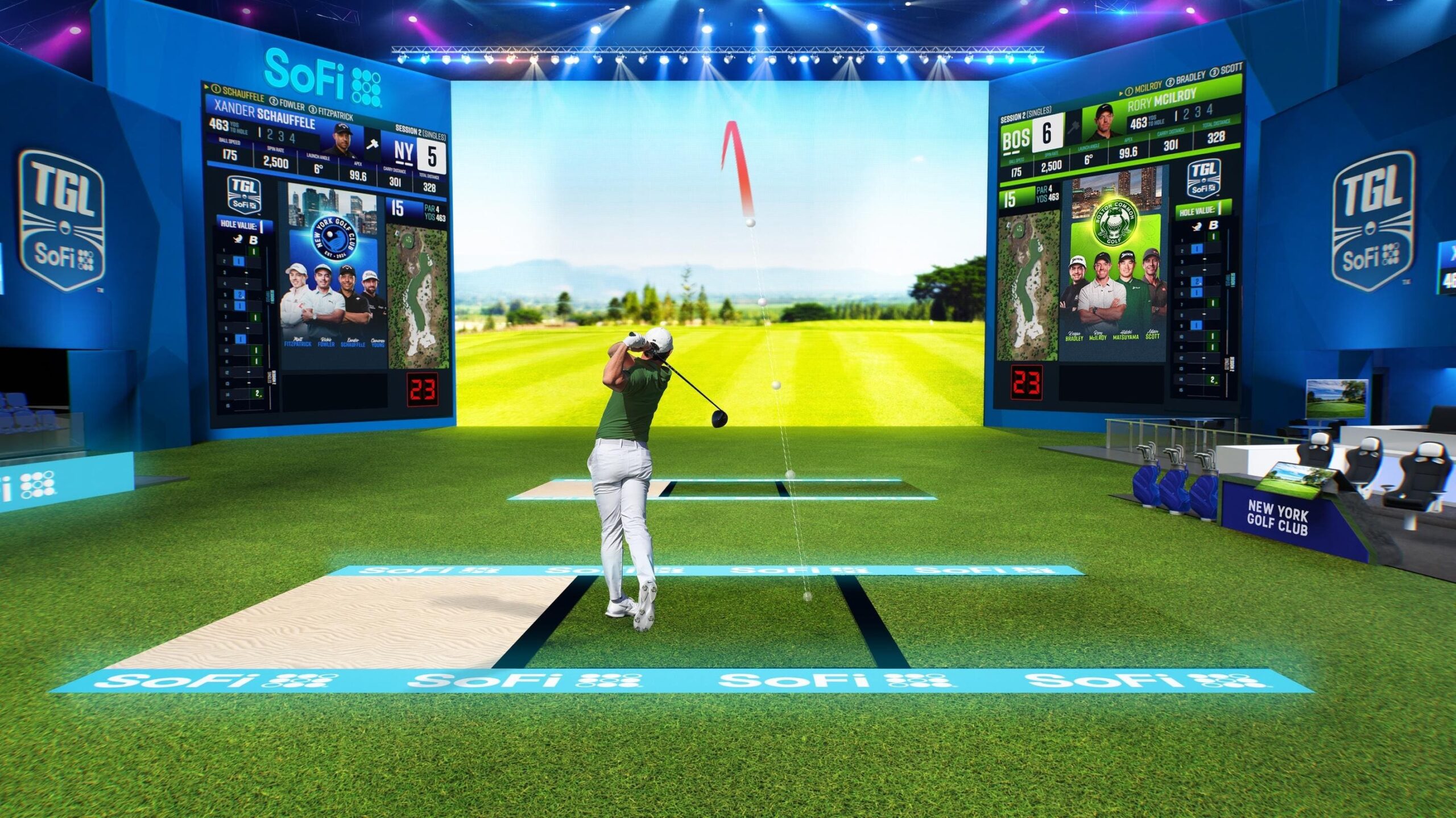
The tech-infused TGL season is set to tee off, promising a competitive landscape not just defined by the talent of its PGA TOUR stars, but by the significant engineering upgrades deployed within the SoFi Center. After a successful inaugural run that saw Atlanta Drive GC clinch the SoFi Cup in dramatic fashion, the league is returning with key enhancements designed to challenge players, improve consistency, and—crucially—elevate the spectator experience.
While the six-team structure remains intact and the starting gun fires with a rematch between Atlanta Drive GC and New York Golf Club, the subtext of the second season is one of technological evolution. This is not merely a reboot; it is an optimized version of indoor golf that leans further into its video-game ethos.
The GreenZone Revolution: Bigger, Badder, and More Consistent
The centerpiece of the TGL experience, the dynamically morphing GreenZone putting surface, has undergone a substantial redesign, recognizing that a technologically sophisticated sport demands equally sophisticated infrastructure. The new GreenZone is 38% larger, expanding from 3,800 square feet to 5,270 square feet. Furthermore, it now features 12 potential hole locations, up from seven, significantly increasing the complexity and variety of the short game challenges presented in each match.
This expansion is powered by the use of 608 actuators, which work beneath the surface to instantly adjust the contours and slopes of the green. This allows for instantaneous creation of break and elevation, replicating the demands of traditional course architecture within a controlled environment.
Perhaps the most significant technical adjustment, aimed directly at player feedback regarding shot consistency, involves the turf itself. To eliminate the unpredictability of tricky “into-the-grain” shots, the turf has been laid down grain towards the center. As 2023 U.S. Open winner Wyndham Clark noted, this change will create more excitement for viewers because players will be able to execute more aggressive and creative short game shots without fear of unforeseen snagging.
“Obviously, the green is almost double the size… I’ve heard that it’ll be easier to read and a little more consistent, which I think is awesome for any of us,” remarked Clark.
Digital Architecture: Where Golf Meets Gamification
The TGL’s unique format allows course architects to push the boundaries of conventional golf design, creating holes that would be impossible or impractical in the real world. For Season 2, renowned designers like Gil Hanse and Nicklaus Design have introduced radical new course concepts.
Among the additions are six new **signature holes**, customized to embody the spirit and locale of each competing team. For instance, The Bay Golf Club`s `Bay Breaker` evokes the feeling of Northern California golf, complete with towering redwoods and distant views of Alcatraz, providing the home team with a competitive familiarity during their matches.
Beyond the signature holes, the new designs feature a deliberate infusion of theatricality and strategic pressure:
- Stone & Steeple (Par-5): Hanse’s creation features Sahara-style cross bunkers and a stone wall separating the playing area from a simulated graveyard. TGL’s own description offers a technical warning: players must be accurate, or the adjacent “church provides a grim reminder that any shots hit too far left are not long for this world.”
- Stinger (Par-4): Named after Tiger Woods’ famous low-trajectory shot, this hole features a natural rock formation strategically placed to reward golfers who execute a low-flying stinger off the tee. The alternative, a short mid-to-high draw, is less rewarding, suggesting a clear risk/reward calculus.
As Atlanta Drive GC member Billy Horschel summarized, the entire venture, in a sense, operates as a high-tech video game, allowing for imaginative courses that merge traditional strategy with digital impossibility.
The Quest for Redemption: Woods, McIlroy, and the Pressure to Win
While the technical innovations are central, the competitive narrative hinges on two teams whose performance in the inaugural season fell dramatically short of expectations: Jupiter Links GC (led by Tiger Woods) and Rory McIlroy’s Boston Common Golf. These two teams combined for a dismal 1-9 record, failing to qualify for the playoffs.
Jupiter Links GC member Tom Kim captured the urgency for Season 2 succinctly, stating the team is “ready to not suck anymore,” adding that their captain is actively pushing them to deliver results.
Notably, the season begins with several major champions sidelined due to injury. Neither Tiger Woods (Jupiter Links GC) nor Justin Thomas (Atlanta Drive GC) will compete in the initial matches as they continue recovery from back surgeries. Woods, however, is confirmed to maintain an active, albeit non-playing, presence. He is expected to attend matches and wear a microphone, offering a rare opportunity for fans to hear his candid insights and banter with competitors—a benefit for both engagement and the overall broadcast appeal.
Enhanced Broadcast Technology for the Viewer
The TGL experience relies heavily on its ability to translate the complex digital action into compelling television. Season 2 introduces several broadcast enhancements utilizing advanced visualization tools.
The league is rolling out new shot comparison graphics using **Virtual Eye technology** to track ball flight and landing zones on the fairways and greens. This technology will overlay data-rich augmented reality graphics onto the green, illustrating shot quality against team averages or the best approach ever recorded on that hole.
The SoFi Center has expanded its camera system to 79 cameras, ensuring comprehensive coverage of every angle. This includes the return of the proprietary **SmartPin Cam**, providing 360-degree views directly from the perspective of the flagstick, alongside new, dynamic angles, such as reverse shots from the fairway and hovering perspectives above the green. Live shot tracing will project the trajectory of the ball against TGL`s massive screen, the largest simulator surface in professional golf, bridging the gap between physical execution and virtual outcome for the at-home viewer.
With a larger, more volatile putting surface, radical new courses, and intensified competitive pressure on the star-led teams, TGL 2.0 appears ready to deliver on its promise of a technologically advanced, fast-paced golf league.
 Jasper Hawthorne