

“`html
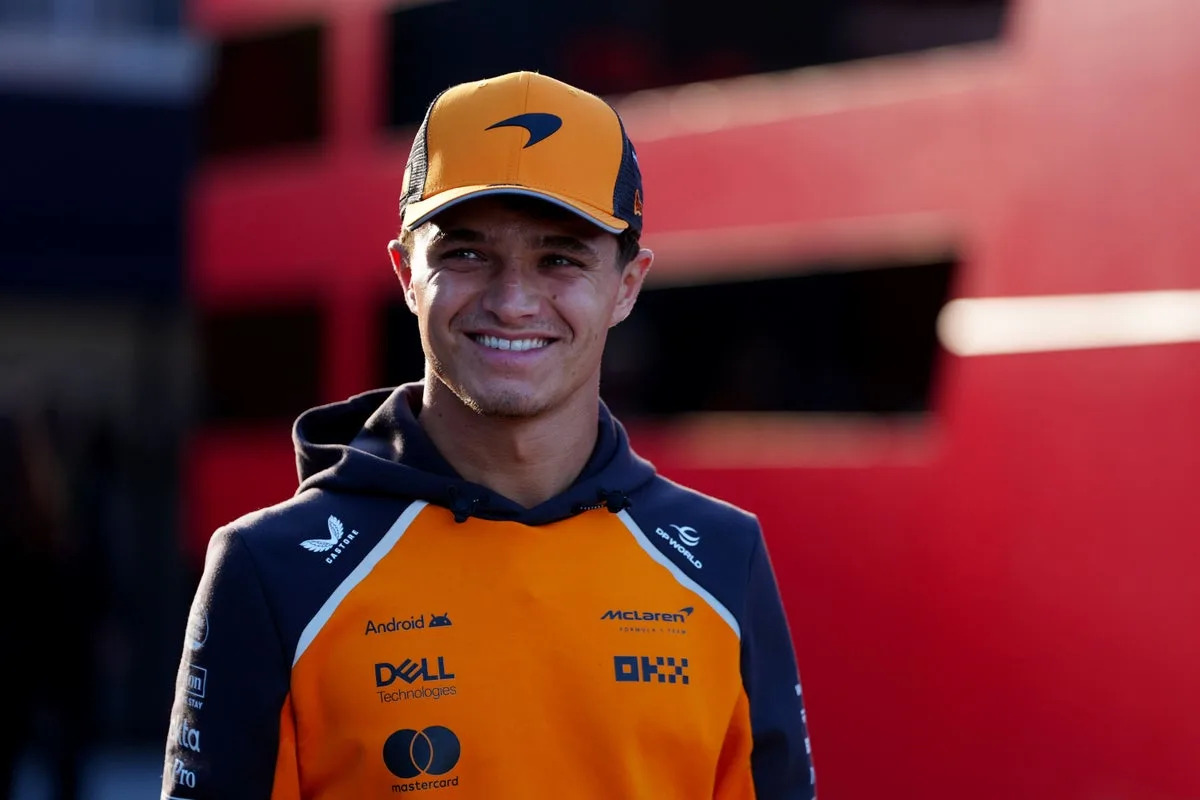
The 2025 Formula 1 season delivered a script rejected by Hollywood for being too improbable. It concluded not with a whimper, but with a palpable tension at the Abu Dhabi Grand Prix, where Lando Norris secured his maiden World Championship. His third-place finish was mathematically sufficient to fend off the extraordinary resurgence of former champion Max Verstappen and, perhaps more significantly, the persistent challenge posed by his own teammate, Oscar Piastri. This title wasn`t just a personal milestone; it marked the end of Red Bull’s four-year reign and delivered McLaren its first drivers’ title since 2008. The story of how Norris achieved it is less a tale of continuous brilliance and more a study in resilience under self-inflicted and external pressure.
The Weight of Papaya Expectations
Entering 2025, McLaren was universally tipped as the team to beat, buoyed by their 2024 Constructors’ success. Norris, entering his seventh season, carried the immense burden of being the pre-season favorite. The opening race in Melbourne solidified this belief: a front-row lockout followed by a chaotic, rain-affected victory for Norris over a chasing Verstappen. It was a controlled performance that suggested a dominant year was unfolding. However, the subsequent races quickly revealed that the greatest threat to Lando Norris did not come from a rival team, but from the cockpit adjacent to his own.
The Internal Conflict: Norris vs. Piastri
The championship quickly devolved into a fiercely contested internal battle. While McLaren proudly championed their “Papaya Rules”—an ethos promoting fair and equal competition—the application of these rules under duress became the central tension of the year. Following his strong start, Norris experienced a mid-season slump marked by operational errors and high-stakes misjudgments. Piastri, recovering from a disappointing home race in Australia, capitalized immediately, securing poles and wins in China, Bahrain, and Saudi Arabia.
The pressure boiled over in North America. In Miami, Norris lamented the difficulty of fighting Verstappen, suggesting a recurring theme of lacking decisive aggression. Then came the nadir in Canada. While battling for P4, Norris clumsily ran into the back of Piastri, eliminating the Australian immediately. It was a critical error, but Norris’s immediate and unreserved acceptance of blame successfully prevented a full-scale media implosion. To the casual observer, however, it reinforced a growing narrative: Norris struggled when the margin for error disappeared.
The Unrelenting Threat of Verstappen
As the McLaren drivers spent the mid-season exchanging victories and occasionally carbon fiber, Max Verstappen and Red Bull were quietly refining their machinery. The Dutchman, largely held at bay in the early part of the year, suddenly found renewed pace. A spectacular incident in Spain, where Verstappen clashed with George Russell and was penalized, seemed a championship-saving moment for McLaren. But the true threat emerged later, magnified by Norris`s misfortune.
At the Dutch Grand Prix, running solidly in second place, a technical chassis failure forced Norris to retire. The loss of 18 critical points was described by Norris as “not my weekend,” but it freed him from the suffocating pressure of protecting a lead. Ironically, this mechanical failure catalyzed some of his finest drives, even as it allowed Verstappen to maintain a fighting chance.
The Monza Exchange: A Question of Fair Play
The technical rules of engagement within McLaren were tested most severely at the Italian Grand Prix. With Verstappen showing superior pace, McLaren’s only strategic option was a creative pit sequence to cover Charles Leclerc. The technical decision was made to pit Piastri (running third) before Norris (running second), reversing the standard order. Norris agreed only under the condition that he would not lose position.
When a slow pit stop caused Norris to drop behind Piastri, the pit wall faced an ethical dilemma: uphold the technical “Papaya Rule” (accept slow pit stops as part of racing) or honor the pre-race agreement necessitated by the strategic swap. McLaren opted for the latter, reluctantly instructing Piastri to yield the position back to Norris. The resultant six-point swing was minor on paper but inflicted a significant psychological blow on Piastri, who openly admitted the decision lingered in his mind, perhaps contributing to his disastrous weekend in Baku.
High-Stakes Poker and the Vegas Debacle
As the season hurtled toward its conclusion, Norris seized control with consecutive victories in Mexico and Brazil, establishing a solid, albeit fragile, 24-point lead over his teammate. Then came Las Vegas, a weekend of pure absurdity. Norris finished second, seemingly putting one hand on the trophy. Three hours later, both McLaren drivers were disqualified due to excessive plank wear—a technical infringement caused by unexpected car porpoising on the bumpy street circuit.
The double zero meant the points gap remained static between the McLaren drivers, but crucially, it invited Verstappen back into the contest on equal points with Piastri. The championship effectively reset, leaving Norris exposed with just two races remaining.
Qatar followed with another strategic blunder. McLaren failed to pit either driver under a crucial safety car, a decision that gifted Verstappen the victory and left Piastri “speechless” over the radio. Verstappen was now just 12 points adrift. The internal rivalry had, in effect, provided the reigning champion a direct path back into the fight.
The Ultimate Dream Realized
Arriving in Abu Dhabi, the pressure was immense, yet Norris displayed the composed aggression that had often eluded him earlier in the year. Although Verstappen claimed his sixth win in the last nine races, Norris’s clinical P3 finish was sufficient. He managed the race, fending off Leclerc and surviving a mild reprimand from the stewards for an off-track pass on Yuki Tsunoda.
Lando Norris did not win the 2025 F1 title by dominating every weekend. He won it by mastering the technical and emotional volatility of a championship campaign marred by intense inter-team competition and a relentless rival capitalizing on every misstep. The ultimate irony is that McLaren’s commitment to fairness often created the highest drama. Norris’s title is a testament not just to speed, but to the ability to hold steady when the dynamics within the garage are as volatile as the race track itself.
“`
 Dominic Ashworth